Browse products


Newsletter

Sign up for deals

S3 Arctic Series

World's most powerful handheld laser.

S3 Arctic Series
Click to enlarge

S3 Arctic Series
S3 Arctic Series
S3 Arctic Series
S3 Arctic Series
$0.00
Availability: In Stock
Share this page:

In order to better serve our customers, we are not accepting preorders at this time. Please sign up below to receive updates on this model's availability.

The S3 Spyder III Arctic is the world's most powerful laser you can legally own. It's got a cool-blue, but blazing-hot, 1W laser beam. Currently being tested by Guinness World Records this is the world's most powerful handheld laser.

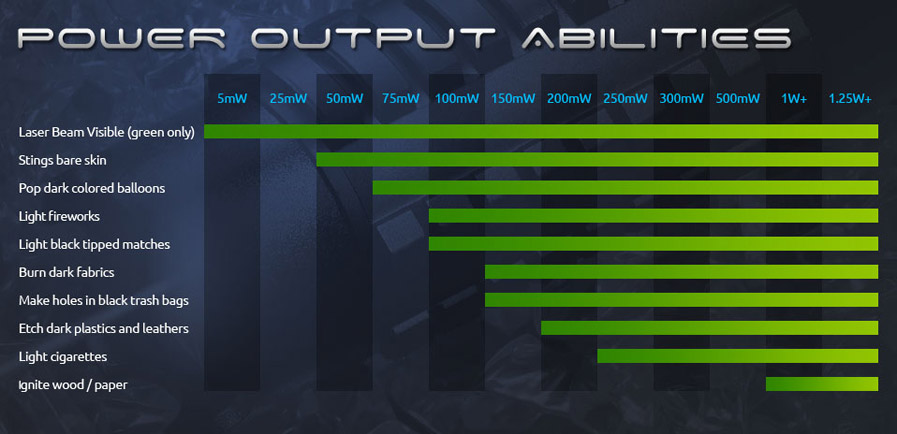
  • Completely legal laser power. The 1000 mW output power of the blue laser beam is able to burn through balloons, plastic, and much more. In the U.S., it's totally legal to use a laser of any power for appropriate, non-commercial private use.*
  • 100% unlimited duty cycle. Operate the laser continuously, 24/7 with no risk of damaging the laser diode.
  • Strong laser in a strong body. The aircraft grade aluminum chassis lets you be confident that the body is as tough as the laser is strong. It's also totally portable, smaller than a regular flashlight, you can carry all this power in the palm of your hand.
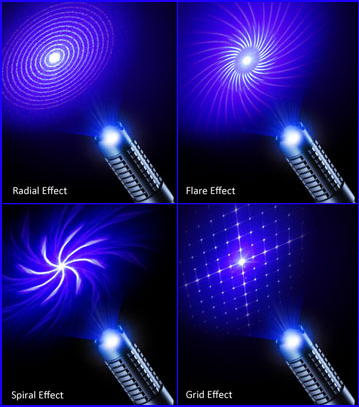
  • More than just power. This is the first laser to have nine operating modes: Strobe Mode (Hi / Low), Constant Wave (Hi / Low), SOS (Hi / Low), Beacon (Hi / Low), Tactical Hibernation Mode. You have total control of the 1 Watt laser beam.
  • Powerful safety features. The new Smartswitch 2.0 technology locks out unauthorized access to your laser so you have peace of mind this super-powered laser is safe when you're not around, now with 9 operation modes - including 5 new tactical modes - SOS (Hi / Low) , Beacon (Hi / Low) , and Tactical Hibernation.

Comes with :

  • Safety Goggles
  • Tactical Nylon Holster
  • Rechargeable Sanyo 18650 Battery and Charger
  • Safety Guide

Note

This laser is too powerful to be used as a gun sight. Never point it at another person, animal, or vehicle.

Featured video

Name: S3 Arctic Series
Class: 4
FDA Accession No.: 0920211-000
Size: 228mm x 35.8mm
Weight: 421g (laser + holster + dust proof lens)
Wavelength: 445nm
Laser Body: 6061-T6 Aircraft-Grade Aluminum
Laser Finish: Mil-Spec Type III hard anodized in black
Transverse Mode: TEM00
Max Power: 1000mW
Min Power: 500mW
Beam Divergence: 1.5mRad
Beam Diameter: 5.0 mm
NOHD* 149 meters
Beam Distance 0.25 Lux 6856 meters
Required Eyewear O.D. 3.0+
Power Consumption: 3.7V @ 1A
Power supply: Sanyo Lithium 18650 (batteries and charger included)
Battery Lifetime: 120 mins
Switch: Push Button Constant On / Off, Lock-Out Tail Cap, Electronic Mode switch
Modes: High power / Low Power / Strobe / Continuous / SOS / Beacon /Tactical Standby modes
Duty Cycle: Continuous
Expected lifetime: >5,000 hours
Warranty: One Year

FDA Accession No.:

The FDA is the United States Department of Health and Human Services. FDA imports use accession numbers to confirm that a manufacturer has followed the reporting requirements for the product being imported.

Laser Body:

The materials that make up the physical casing of the laser. The outer casing also serves as a heat sink for the laser module inside.

Laser Finish:

The final scratch-resistant finish applied to the laser casing.

Wavelength:

Visible light has a wavelength range of 400-700 nanometers (nm). Between lasers of equal output power (in mW), lasers closest to the peak visibility wavelength of 555nm will have more range and brightness than other wavelengths of laser light. Green lasers (532nm) are closest to the peak visibility wavelength (555nm), and therefore brighter than red, blue, and purple lasers. A laser's wavelength and power are two of the most important factors in choosing a laser. Please click here to learn about how different wavelengths correspond with relative brightness.

Transverse Mode:

In a laser with cylindrical symmetry, the transverse mode patterns are described by a combination of a Gaussian beam profile with a Laguerre polynomial. The modes are denoted TEMpl where p and l are integers labeling the radial and angular mode orders, respectively.

Max Power:

The maximum power level of the laser beam measured in milliwatts (mW). When choosing a laser a higher output power is brighter than a lower output power. For example, a 650nM @ 5mW laser is brighter than a 650nM @ 1mW laser.

Min Power:

The minimum power level of the laser beam measured in milliwatts (mW). When choosing a laser a higher output power is brighter than a lower output power. For example, a 650nM @ 5mW laser is brighter than a 650nM @ 1mW laser.

Beam Divergence:

A measure of how fast the beam expands as the distance from the source increases. The divergence is measured in milliradians (mrad). A low beam divergence is useful for applications like pointing or free-space optical communications.

Beam Diameter:

The width of the laser beam @ aperture measured in millimeters.

NOHD

The Nominal Ocular Hazard Distance (NOHD) is the distance that a laser beam does not cause immediate or long term damage to a person. Calculated based on a 0.25 second accidental (unaided eye) exposure.

Beam Distance:

The maximum distance (in meters) at which the laser will produce 0.25 Lux of light. It's the standard that flashlights are measured against.

Required Eyewear O.D.:

Indicates whether or not laser protective eyewear is needed, and the necessary O.D. (optical density) of the eyewear for the laser wavelength being used. The indicated O.D. is the minimum O.D. sufficient to protect the user against a momentary intrabeam or specular reflection exposure.

Power Consumption:

The consumption of energy in the form of electricity. The average power consumption of an incandescent night light is 4W.

Power Supply:

The source by which the laser is powered.

Battery Lifetime:

The average amount of time the battery can last on a single charge.

Switch:

The switches that must be engaged to turn the laser on.

Mode:

The available laser beam modes once the laser is activated.

Duty Cycle:

The time cycle of which the laser can be active without causing damage to the laser module.

Expected Lifetime:

The average expected lifetime that the laser module can be in active use.

Warranty:

The time period for which any damaged or dysfunctional laser resulting from manufacturer's defects or workmanship will be replaced with a new product of the same model. Any attempted disassembly by a user will void the product warranty and may irreparably damage the product. We warrant all laser products sold on www.wickedlasers.com to be free of defects in material and workmanship.

CNN

Apparently, the Force is strong in a Hong Kong-based laser company that had irked the creators of "Star Wars."

GIZMODO

The Spyder III, the World's Most Powerful Portable Laser, Is a Real Life Lightsaber.

GUINNESS WORLD RECORDS

The most powerful handheld laser in the world.

CNET

"May I quote its Web site? Don't let the Arctic name fool you, this laser possesses the most burning capabilities of any portable laser in existence. That's why it's also the most dangerous laser ever created."

FOX NEWS

The device -- with a beam 1,000 times stronger than sunlight on the skin -- is touted by makers as "the most dangerous laser ever created."

WALL STREET JOURNAL

The "most dangerous laser ever created" may sound like the perfect gift for the supervillain who has everything

THE SUN

The laser is 1,000 times stronger than the green laser pointers which are available to the public.

NEWS.COM.AU

The laser is 1,000 times stronger than the The Astronomical Society of Australia says any power over 20mW is "excessive", making the Spyder III fifty times stronger than what's needed to point out planets and stars.